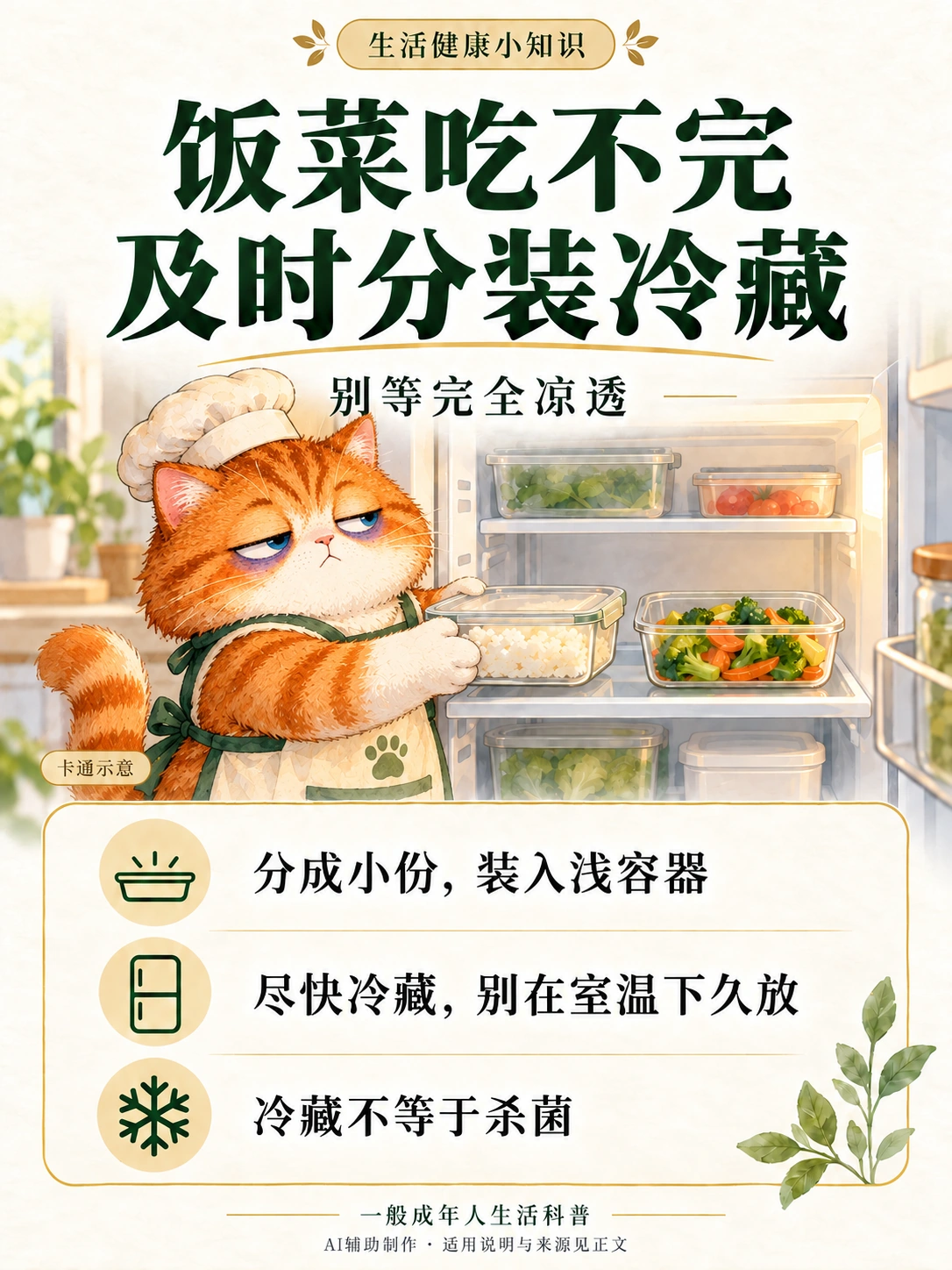
吃不完的熟食,不必放在桌上等到完全凉透。更实用的做法是:用干净的浅容器分成小份,及时放进冰箱。小份温热食物可以直接冷藏;一大锅汤或炖菜应先分装,帮助快速降温。
记住这三个细节:
1. 尽快收好,别等到“时间用满”。
易腐熟食通常应在2小时内冷藏;环境高于约32°C时,应在1小时内冷藏。做熟后没有持续保温、摆在桌上的时间也算在内,别从吃完饭才开始计时。
2. 浅盒分装,冰箱留点空隙。
冷藏室建议保持在4°C或以下,可用冰箱温度计检查。别把冰箱塞得太满,让冷空气能够流通。
3. 冷藏不等于杀菌。
低温能减慢细菌繁殖,但不能让食物一直安全。放置过久的饭菜,不能靠重新加热保证安全,因为某些细菌产生的耐热毒素可能仍然存在。
一个小例子(虚构):小林晚饭做多了,收拾餐桌时就把剩下的饭菜分进浅盒,及时冷藏,没有留在灶台上等到睡前。这个例子只是说明操作方法,不代表任何个人的健康经历。
今天只记住一句:吃不完,分小份,尽快冷藏。
适用说明:本文面向一般成年人,介绍家庭易腐熟食的日常保存原则,不适用于所有食品,也不能判断某份食物是否安全。特殊食品请遵照包装和专业指导;科普不替代个体诊疗。
本文与配图为AI辅助制作,依据下列公开资料核对;例子为虚构。资料核查日期:2026年10月10日。
参考资料
English version
Have Leftover Food? Portion It Out and Refrigerate Promptly
Cooked food you cannot finish does not need to sit on the table until it has cooled completely. A more practical approach is to divide it into small portions in clean, shallow containers and put it in the refrigerator promptly. Small portions of warm food can go straight into the refrigerator; a large pot of soup or stew should first be divided into smaller portions to help it cool quickly.
Remember these three details:
1. Put it away as soon as possible; do not wait until the time limit is up.
Perishable cooked food should generally be refrigerated within 2 hours; when the surrounding temperature is above about 32°C, it should be refrigerated within 1 hour. Count the time it spends on the table after cooking without being continuously kept hot, too. Do not start the clock only after the meal is over.
2. Divide it into shallow containers, and leave some space in the refrigerator.
The refrigerator compartment should be kept at 4°C or below; you can check this with a refrigerator thermometer. Do not pack the refrigerator too full, so that cold air can circulate.
3. Refrigeration does not mean sterilization.
Low temperatures can slow bacterial growth, but they cannot keep food safe indefinitely. Reheating cannot guarantee the safety of food that has been left out too long, because heat-resistant toxins produced by some bacteria may still be present.
A small example (fictional): Xiao Lin cooked too much for dinner. While clearing the table, Xiao Lin divided the leftovers into shallow containers and refrigerated them promptly, rather than leaving them on the stove until bedtime. This example only illustrates the procedure and does not represent anyone’s personal health experience.
Just remember one sentence today: If you cannot finish it, divide it into small portions and refrigerate it as soon as possible.
Scope: This article is intended for adults in general and introduces everyday principles for storing perishable cooked food at home. It does not apply to every food and cannot determine whether a particular portion of food is safe. For special food products, follow the packaging instructions and professional guidance; health education does not replace individual diagnosis and treatment.
This article and its accompanying illustration were produced with AI assistance and checked against the public sources below; the example is fictional. Sources checked on October 10, 2026.